Let History Never Forget the Complicity of Palestinian Supporters
By excusing October 7 and rallying behind Hamas and Palestine instead of the hostages, protesters and governments gave terrorists the cover they needed; prolonging the war, deepening Palestinian suffering, and ensuring more innocent lives were lost.
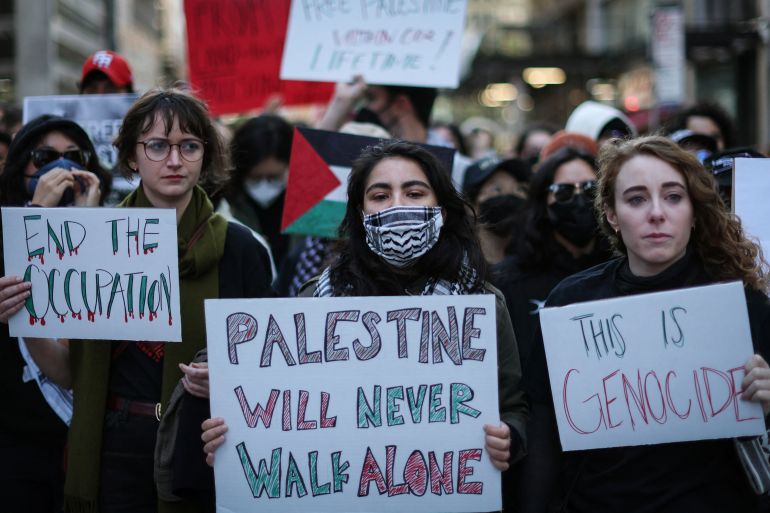
Had that been the response, Hamas would have been cornered. Their political cover would have collapsed, their external backers would have been forced to step back, and their strategy of hiding behind civilians would have faltered. The hostages could have been released more quickly. The war might have been shorter and less destructive. Palestinian civilian deaths would almost certainly have been far lower.
Instead, the opposite happened. Crowds celebrated “resistance.” Protesters excused terror. Governments in the region sided with hostage-takers. Much of the international community looked past the atrocities and turned its fire not on Hamas but on Israel. The message this sent to Hamas was unmistakable: you have a free pass. You can slaughter, abduct, and hide underground while the world blames the Jews.
The result was that Israel was left once again to fight alone. This pattern is as old as Jewish history itself. When Jews are massacred, sympathy is fleeting or absent. When Jews defend themselves, they are condemned for surviving. In 1948, when Israel was born, it was attacked from every side and blamed for daring to exist. In 1967, when Israel fought for survival, it was branded the aggressor. And in 2023, when Jews were murdered in their homes and at a music festival, they were told to restrain themselves while the world turned out in numbers to protest not the terrorists but Israel.
On October 7, Hamas carried out atrocities that shocked even hardened observers of the conflict. Entire families were butchered, women were raped and dragged into Gaza, children were killed, and elderly people were kidnapped. These acts were not disputed. Hamas itself filmed and broadcast them with pride. For a moment, the world had absolute clarity about what had happened. Yet within days, the narrative began to shift. Instead of protests demanding justice for the murdered and freedom for the hostages, Western cities erupted with marches glorifying “resistance.” Instead of outrage at terrorism, there was a rush to contextualise, to excuse, to shift attention onto Israel.
This is where complicity began. Every chant of “from the river to the sea” after October 7 told Hamas they had achieved something more valuable than a military strike. They had achieved a propaganda victory. They saw that large sections of global civil society would not only refuse to condemn them, but would actively cheer them on. They understood that the focus would quickly turn to Israel’s response, not their own crime. This gave Hamas the confidence to drag out the war, to hold hostages underground for months, to continue hiding in tunnels beneath hospitals and schools. They knew the longer the conflict lasted, the more the narrative would work in their favour, because protesters around the world had already signaled they were willing to blame Israel no matter what.
Arab governments deepened this betrayal. Rather than uniting to pressure Hamas, many chose to embrace them. Statements of support, rallies in capitals, and diplomatic cover ensured Hamas would not be isolated. This meant that Israel’s struggle was not just against Hamas on the battlefield, but against a tide of political hypocrisy across the region. Once again Jews were told that their lives were negotiable, their security secondary, and their right to defend themselves conditional.
The role of the United Nations cannot be ignored either. Instead of standing with Israel in its hour of grief, the UN became a forum where the spotlight turned rapidly to Israel’s conduct. There was no global mobilisation demanding Hamas free its captives. There was no binding resolution insisting Hamas stop using civilians as shields. No Red Cross seeing to the hostages. There was no moral clarity. The effect was the same as the protests in Western streets: it gave Hamas a shield.
For Palestinians trapped in Gaza, this failure has been catastrophic. By refusing to hold Hamas accountable, the world allowed Hamas to continue sacrificing civilians as human cover. Every civilian death in Gaza is the direct result of Hamas’ strategy, but that strategy only works if the world blames Israel instead of Hamas. And too many people, from the streets of Canada to the corridors of the UN, were willing to do just that. The result has been thousands of unnecessary deaths, destruction on a massive scale, and the continued suffering of ordinary Palestinians. Those who marched under “Free Palestine” banners claiming to care for the Palestinian people actually prolonged their agony by keeping Hamas alive. They throw red paint on others when the paint should be on each and every one of them.
Israel faced an impossible choice. No government can tolerate a terrorist army that slaughters civilians and vows to repeat it again and again. To do nothing would have been to invite annihilation. Yet to act meant walking into a trap Hamas had prepared, knowing the world would turn on Israel once the bombs began to fall. In the end, Israel had no choice but to fight. And the protests and condemnations that followed did not save Palestinian lives. They only emboldened Hamas to keep using them as cannon fodder.
The protesters who filled the streets of Western cities after October 7 claimed to march for justice. In truth, they marched for the very terrorists who caused this war. They claimed to stand for Palestinian lives. In reality, they ensured more Palestinian deaths by strengthening Hamas’ hand. They claimed to be on the side of humanity. In reality, they sided with hostage-takers, rapists, and murderers. Their complicity is not symbolic, it is real. Without their cover, Hamas would have been isolated. With their cover, Hamas survived, and thousands died.
History will not look kindly on this moment. It will record that Hamas committed atrocities, but it will also record that thousands around the world chose to excuse them. It will record that instead of demanding hostages be freed, crowds celebrated their captors. It will record that instead of condemning terrorism, some Arab governments rallied behind and even funded it. It will record that the international community once again left Jews to fight alone, condemned not for dying but for surviving.
When the record of this war is written, let it never be forgotten that Hamas pulled the trigger, but it was the protesters and the governments who gave them the ammunition of legitimacy. Let it never be forgotten that those who claimed to march for Palestine prolonged Palestinian suffering. Let it never be forgotten that once again, in the face of Jewish blood spilled, the world looked away or turned its anger on the victims themselves.


Comments
Post a Comment