What Can Demolition Man Teach Us About the Israeli–Palestinian Conflict?
Oh, the irony — a futuristic film made in the past ends up telling us exactly what we are now living through in the future. And here we are, ignoring its lesson.
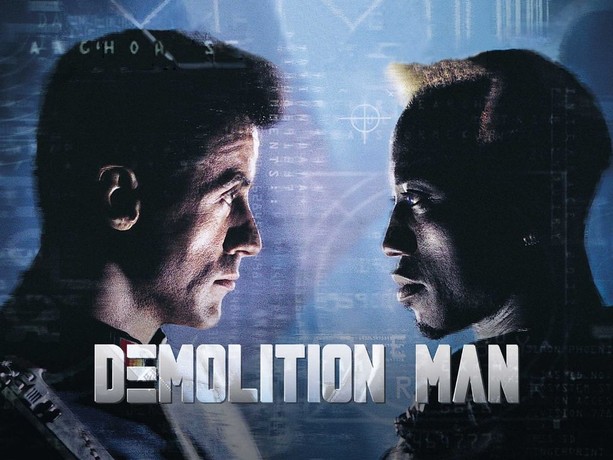
That line could just as easily describe the way many in today’s world view Hamas. Phoenix is not simply a criminal, he is chaos personified, ruthless, unpredictable, and thriving precisely because his opponents have lost the stomach to confront brutality. Hamas mirrors this. It launches massacres, takes hostages, hides among civilians, and then counts on the world’s peaceful instincts to hesitate and condemn those who try to fight back.
To stop Phoenix, the future society has only one choice: bring back John Spartan, a cop from a tougher time. Spartan is rough, imperfect, and not what a “peace-loving” culture wants, but he is exactly what it needs. As the film shows: “It takes one to catch one.” This is where the parallel with Netanyahu becomes unavoidable. Netanyahu is not loved by everyone, nor is he flawless, but he is the figure willing to confront Hamas in a way that soft rhetoric and symbolic protests cannot.
The parallels go deeper. In the film, before Spartan is cryogenically frozen, he is blamed for the deaths of hostages that Phoenix had already killed. Phoenix spreads the story that Spartan’s reckless actions caused their deaths, and polite society believes it. Spartan is condemned, sentenced, and put on ice for decades. Only later does Phoenix himself admit the truth: the hostages were already dead before Spartan even arrived.
Isn’t that what we see today? Netanyahu is blamed for every civilian casualty in Gaza, even when Hamas is the one hiding among families, storing weapons in hospitals, and teaching children to die as martyrs. The propaganda blames “Spartan” for deaths that were engineered by “Phoenix.” Much of the international community repeats the line without question, just as the society in Demolition Man repeated the lie about the hostages.
The film also shows how even after Spartan is thawed out to stop Phoenix, the same leaders who begged for his help quickly turn on him whenever Phoenix causes destruction. They accuse him of being part of the problem, of bringing violence with him, when in fact he is the only one willing to confront the source of the chaos. Yet in the end, when Phoenix is finally defeated, those same leaders change their tune and thank Spartan for saving them.
That is the uncomfortable truth playing out in today’s conflict. Hamas causes the destruction, but Netanyahu carries the blame. Peaceful societies far removed from the danger chant slogans, condemn Israel, and blame “Spartan” for every tragedy, while ignoring the fact that it is Phoenix who keeps pulling the trigger. History may judge this very differently. When Hamas is gone and the propaganda collapses, many may realise that the blood was always on Phoenix’s hands.
Demolition Man isn’t just a science-fiction movie. It’s a parable about the limits of civility when faced with brutality, and about how uncomfortable figures like John Spartan become necessary when others are too naïve, too cautious, or too idealistic to stop evil. Hamas is Simon Phoenix: violent, cunning, and determined to burn down everything civil society builds. Netanyahu is John Spartan: flawed, blunt, and accused of being the problem, yet doing what polite society cannot.
The lesson is clear. Peace requires courage to confront those who exploit peace. Civility is precious, but it cannot defend itself against those who use it as cover. And just as in the film, the very people blaming Spartan today may one day thank him when Phoenix is finally gone.


Comments
Post a Comment